
Ashoka University Economics Society in collaboration with Isaac Centre for Public Policy had the privilege of hosting Gurcharan Das, former CEO of Procter & Gamble India, for an insightful session on India’s economic journey since 1991 and the roadmap to 2047.
Mr Das framed 1991 as India’s true economic independence, highlighting how these reforms lifted about 447 million people from poverty, but failed to spark an industrial revolution- a critical gap in India’s development story.
International trade and urbanization have been two important engines of economic growth for countries around the globe. However, in recent years, both have encountered significant disruptions. The COVID-19 pandemic accelerated the shift to remote work, prompting demographic shifts as people relocated away from urban centers, raising questions about the future of cities and labor markets. At the same time, post-pandemic industrial policies—ranging from subsidies to tariffs—have placed new pressures on global trade dynamics, reshaping supply chains and economic relationships between nations. As cities have historically thrived as hubs of commerce and international exchange, these shifts in trade policies and workforce distribution are redefining the economic role of urban centers. Against this evolving landscape, this talk will explore pressing issues and emerging ideas in urban and labor economics, as well as international trade, offering insights into how these forces continue to shape economic development.
We’re thrilled to share that the Isaac Centre for Public Policy (ICPP) at Ashoka University joined as the Knowledge Partner for our academic competitions at Equilibrium 3.0, Ashoka’s annual economics fest.
ICPP is dedicated to becoming India’s leading hub for public policy research and ideas, contributing to inclusive, sustainable, and accelerated growth for the nation. In line with this vision, ICPP collaborated on four innovative, academically-driven events that brought learning into real-world application:
The Isaac Centre for Public Policy and Department of Economics organized The Economics Exchange series featuring presentation by Sankalp Mathur, Priyam Verma, Anshuman Tiwari, and Keynote address by Prof. Donald R. Davis.
The Ashoka University Economics Society was honored to host Dr. Duvvuri Subbarao, former Governor of the Reserve Bank of India (2008-13), for an insightful discussion on the challenges of central banking and economic management during the Global Financial Crisis (2008-09).
Trump’s aggressive tariff policies have triggered a global trade war, impacting numerous trading partners, including India. In response, India has adjusted custom duties to mitigate the effects. While initially avoiding the full brunt of tariffs, India faces ongoing challenges and opportunities in this volatile trade environment. The question remains: can India leverage this situation for economic growth, or will it hinder progress. Watch Dr. Prachi Mishra (Head, ICPP) discusses the tariff policies and its impact on the Indian Economy in the Big Questions.
Link: https://www.youtube.com/watch?v=nyM8TEOmrwE
Event Overview: Isaac Centre for Public Policy (ICPP) hosted a workshop led by Professor Jeffrey Liebman, Professor of Public Policy at the Harvard Kennedy School and Distinguished Fellow at ICPP. Between two sessions, around 60-65 participants engaged in a detailed discussion of a Harvard case study examining the effects of cash benefits on healthcare utilization and health outcomes, offering valuable insights for those interested in evidence-based policy analysis and implementation.
About Professor Jeffrey Liebman: Dr. Jeffrey Liebman is the Robert W. Scrivner Professor of Public Policy at the Harvard Kennedy School, where he teaches courses in social policy, public sector economics, and American economic policy. At Harvard Kennedy School, he is Director of the Government Performance Lab, which has been providing pro bono technical assistance to state and local governments since 2012 to improve the results they achieve for their citizens.During the first two years of the Obama Administration, Professor Liebman served at the Office of Management and Budget (OMB), first as Executive Associate Director and Chief Economist, and then as Acting Deputy Director. He has also served in the Clinton Administration as Special Assistant to the President for Economic Policy. In these roles, he played a key part in shaping economic policy and overseeing budgetary matters during a critical period for the U.S. economy.
Panelists – Dr. KP Krishnan (Former Secretary, Ministry of Skill Development and Entrepreneurship, Government of India), Ashish Dhawan (Founding Chairperson, Board of Trustees, Ashoka University), Smt. Uma Mahadevan (Additional Chief Secretary and Development Commissioner, Government of Karnataka)
Date: 21st September 2024

In Conversation With – Dr. Prachi Mishra (Director & Head, Isaac Centre for Public Policy, Ashoka University)
Speaker – Shri NK Singh (Chairman, 15th Finance Commission of India & Former Member of Parliament, Rajya Sabha)

Keynote Address
Speaker – Dr. V Anantha Nageswaran (Chief Economic Adviser, Government of India)

Overview of Indian Regulatory Systems and Financial Regulators
Navigating Indian Regulatory Systems
Understanding the Interplay of MoF, RBI, and SEBI
Inside the Regulator’s Room: Unveiling the Decision-Making Process
Mastering Regulatory Consulting: Effective Engagement Strategies
Connecting the Dots: Identifying and Engaging with Key Regulatory Stakeholders
Navigating Competition: The Role of the Competition Commission
Decoding the Insolvency and Bankruptcy Board
Private Sector Insights on Effective Regulatory Engagement
Legal Perspectives on Engaging Effectively with Regulators
Unlocking Opportunities: IFSCA Offerings for PE/VC Firms, Banks, and Financial Institutions

16th Finance Commission – Task Ahead
Moderator – Vivek Johri, Former Chairman, Central Board of Indirect taxes & Customs)
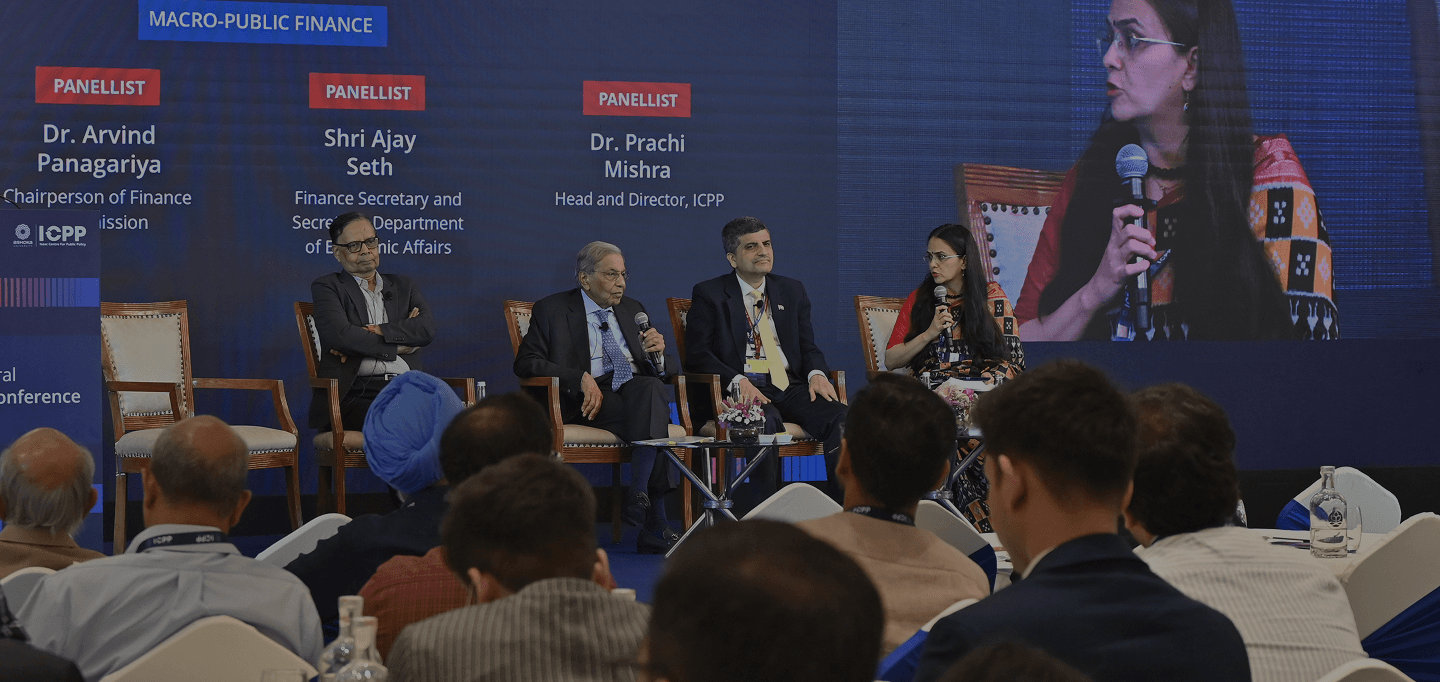
Panelists – M. Govinda Rao (Former Director, NIPFP and member of 14th Finance Commission), Sudipto Mundle (Member, 14th Finance Commission), Poonam Gupta (Director General, NCAER), Pinaki Chakraborty (Former Director, NIPFP)

Event Video:

Moderator – A.K. Bhattacharya, Editorial Director, Business Standard
Panelists – Tarun Bajaj (Former Revenue Secretary), Dr. TCA Anant (Former Chief Statistician), Kavita Rao (Director NIPFP), Pronab Sen (Former Chief Statistician)
Backdrop:
The upcoming fiscal year 2024-25 comes with a unique set of backdrops. It’s an election year so the February budget is vote on account and the full budget would be presented post-election. The fiscal 24-25 would also be the first truly post-pandemic one. Pandemic-induced volatility in key indicators has stabilized and both the Indian and the global economy have performed better than expected in 2023. Inflation in major developed economies has slowed down and the central banks globally might start loosening the rates. On the other hand, the external geopolitical environment remain challenging, and issues ranging from wars in the Middle East and Europe to slowing global trade present new challenges. It’s also an election year beyond India and elections in the US, UK, and Taiwan bring a new set of uncertainties. All of it leaves us at an important junction. It is therefore important to ask- what’s a realistic trajectory for post-pandemic medium-term growth for India and how to face important internal and external challenges?
It is in this background, that the panel would look at the upcoming vote on account and beyond. It will focus on a wide range of issues including:
a. What’s the state of revenues and public finances (both at the central and state level)? What does it mean for the next few years?
b. How have key macroeconomic indicators performed in the past few quarters? Where are they headed? What policy responses do we need to get at a sustained high-level growth rate?
c. State of private sector investment and where it’s headed? What does the private sector expect from policymakers?
e. How should the government be thinking about economic uncertainties and risks coming from external factors?




Subscribe to our newsletter
Subscribe to our newsletter
©2024-25 Isaac Centre for Public Policy