

test designation
Filter by
Sort By

Macro & Public Finance
Published by Aadi Chintawar, Hridya Bhatia, Ahaan Krishnaprasad, Siddharth Chandak
The Policy Brief is written by Ashoka University students from course ECO-3514 offered by ICPP in collaboration with the Economics Department.
Abstract: The introduction of the Insolvency and Bankruptcy Code (IBC) in 2016 marked a paradigm shift in India’s financial landscape, aiming to resolve the twin balance sheet problem and revitalize bank lending. While the IBC has been effective in reducing NPAs and improving bank balance sheets, it has also reshaped India’s credit ecosystem in terms sectoral deployment. This paper examines the unintended consequences of IBC, including increased risk aversion by banks, a decline in credit to industries, and the concurrent rise of NBFCs and consumer loans. Through an analysis of lending trends, we highlight the shift in credit flow from industry to personal loans and the risks posed by the growing reliance on unsecured consumer credit. The next half decade will be crucial in determining whether such a trend is cyclical of the corporate capex cycle or represents a permanent shifts. In case of the latter, we propose two recommendations that improve risk management of unsecured consumers and also incentivise banks to increase lending to industry
that could kick off the required investment cycle.
This essay examines the transformative impact of the Insolvency and Bankruptcy Code (IBC) on India’s financial ecosystem, focusing on its implications for corporate credit, NPAs, and the broader credit landscape. Section 2 sets the stage with reference to Indian economic growth in the early 2000s, the increasing infrastructure investments, and potential hardships of financial distress and NPAs that eventually led to the IBC. Section 3 offers a general overview of the IBC, stressing that it is a revival tool rather than a tool for recovery. Section 4 demonstrates how the post-IBC rates of NPA recovery have improved while at the same time altering the behaviour banks to become more industry risk-averse lenders. Section 5 deals with the post-IBC credit market reshaping. This encompasses the emergence of NBFCs, change in lending patterns, and reallocation of credit into the personal loan segments. Section 6 talks about NBFC’s increased exposure towards unsecured loans and potential systemic risk in consumer credit. Finally, Section 7 concludes with some policy recommendations that include tapping the data of UPI for credit assessment and introducing a securitization framework for industrial credit to maintain risk and growth in the credit market.
During the early 2000s, India rapidly expanded, with GDP growth rates reaching 9-10% annually. Infrastructure investments surged, accounting for 38% of GDP by 2007-2008 as firms launched major projects, particularly in the power generation, steel and telecommunications sectors (Felman et al., 2017). However, the global financial crisis stopped this growth momentum and exposed corporations to significant financial risk. Unable to generate expected returns, many projects became unsustainable and companies struggled to service their debts. As a result, a substantial portion of these corporate loans turned into NPAs, severely impacting the balance sheets of banks and consequently the broader credit ecosystem. Recognizing the economic slowdown and weakened credit flow, the government recognized the need for a solution to address the growing NPA crisis. Resolving these bad loans was essential to restore bank lending and support private sector investment. Adding to the problem, India lacked an efficient mechanism for companies to exit the market, which only worsened the financial strain on companies and banks alike. The legal landscape was also fragmented, with laws such as the Sick Industrial Companies Act, the SARFAESI Act, and others, none of which provided a cohesive, timely, or effective way to manage insolvency. The Twin Balance Sheet (TBS) Problem was one of the key drivers behind introducing the Insolvency and Bankruptcy Code (IBC) in India. This issue, which put banks and corporations under significant financial pressure, created a pressing need for a comprehensive framework to address and resolve financial distress.
In response to the TBS problem, the government introduced the Insolvency and Bankruptcy Code (IBC) in 2016, marking a significant shift in India’s approach to financial distress and insolvency. The IBC was designed as a unified legal framework to address systemic issues in insolvency resolution, streamline distressed asset management, and ultimately restore confidence in India’s credit market (Insolvency and Bankruptcy Regime in India – A Narrative, 2020).
A primary goal of the IBC was to move away from a debtor-friendly regime and establish a creditor-driven system. This new approach empowered creditors to play a central role in determining the course of action when a company was financially distressed, with decisions oriented toward asset recovery and financial stability. To achieve timely resolution, the IBC set a target of 180 days to resolve insolvency cases, with a possible extension of 90 days in exceptional cases, ensuring that distressed businesses are restructured or liquidated without undue delay.
Unlike the fragmented and lengthy recovery mechanisms previously available, the IBC provides a unified framework, helping banks recover funds more efficiently and improve the health of their balance sheets. This structural shift allowed the banking sector to confront the legacy of corporate defaults, which had eroded asset values, restricted lending capacity, and significantly increased recovery rates.
The impact of the IBC on the recovery of NPA has been substantial, accounting for Rs.1,05,773 crore, or roughly 61%, of the total Rs.1,72,565 crore recovered across various mechanisms in 2019-20 (”IBC emerges as major mode of NPA recovery in 2019-20,” 2020). By March 2023, the Gross NPA ratio had reached a decade-low, largely due to lower slippages and improved asset recovery processes enabled by the IBC. Banks that had previously been weighed down by unresolved NPAs have seen marked improvements in their asset quality, allowing them to shift focus toward healthier lending practices and long-term profitability.
The introduction of the IBC has also increased recovery rates exceeding those achieved under prior mechanisms. By helping banks retrieve a greater portion of defaulted funds, the IBC has strengthened the bank balance sheets and allowed more effective reallocation of resources. Yet, the structural changes brought by the IBC have had mixed effects on the banking sector’s approach to credit risk.
Recognizing the stringent recovery standards under the IBC, banks have adopted more conservative lending practices, increasing their scrutiny of borrowers’ financial viability. This shift has directed banks’ focus toward safer, lower-risk segments, such as retail lending, and away from large corporate projects that carry higher default risks. Empirical evidence supports this trend: studies indicate that after IBC’s introduction, loan growth rates in highrisk industries saw a notable decline, signaling a shift in risk tolerance within banks. This conservative stance, while beneficial for asset quality, poses challenges for industries that depend on higher risk-taking by lenders to drive growth.
In 2018, the financial system took a major hit when IL&FS (Infrastructure Leasing and Financial Services), a large NBFC, defaulted on its debts. This caused turmoil in both the banking sector and the debt markets—two key sources of funding for NBFCs. After that, smaller disruptions surfaced at other NBFCs like Dewan Housing and Finance Limited (DHFL) and Indiabulls Housing Finance, as well as at Yes Bank, adding to the overall stress in the system.
This section discusses a change in how banks lend and the reemergence of NBFCs even after the IL&FS crisis. It may be difficult to conclude any net positive or negative benefits from such trends, but it’s hard to dispute a reshaping of the credit market that’s taking place. Three periods shall be referred to here, and a timeline of the same would benefit the subsequent analysis.
2015: AQR was mandated for banks
2016: First IBC regulations
2018: Second IBC regulations and IL&FS Crisis.

NBFCs suffered a volatile dispersion of credit up till 2016, and skyrocketed after 2016 potentially absorbing some of the credit demand shrugged off by banks after the implementation of IBCs and recognition of NPAs. However, the IL&FS crisis dampened NBFC lending until the post-COVID period, after which it rebounded rapidly.

Until 2014-15, 42% of total bank credit was consistently directed towards industry. However, post-IBC saw this half within 8 years to 21%. But, where was this re-channelled? The share allocated towards personal loans almost doubled going from 17% in 2012 to 31% in 2023. This marks a key milestone in bank lending behaviour which is “consumerization” of bank credit. It also raises the question of credit towards industry- historically banks have been the chief supplier to this sector, but a decline could mean two things: (i) industries have started demanding less credit (ii) there are other sources of credit such as NBFCs, AIFs and bonds that sweep in to pick up the demand. We can say that banks have become more risk-averse to industry post the IBC crisis, but is their move towards personal loans a sound one? The risk-aversion from the banks’ end towards industryfirms which predominantly borrowed from banks (and were small and risky) leads to limited supply of credit. This thwarts high-risk and high-growth sectors for major capex and also constrains MSMEs which have huge potential in a country such as India.
To better understand the rise of NBFCs, here are statistics on the growth rate of credit flow for commercial purposes across three groups – banks, NBFCs and others which include registered AIFI (All India Financial Institutions), Housing finance companies (HFCs), Commercial papers (CPs), and private placement of credit. We split into 3 periods- (i) introduction of AQR and IBC (ii) IL&FS crisis (iii) post crisis pick up.

TABLE I. RBI: Handbook of Statistics on Economy of India
What we notice is that the flow of commercial credit post IBC and even extending to the 2018-20 period from banks was negative. NBFCs were relatively flat during IBC and AQR, but dipped post IL&FS into negative territory. All of this is in line with the events that happened and how these institutions would have reacted, but the outlier lies in the growth rate (CAGR) of credit flow during 2021-24. Although banks are quite strong, close to 40% driven by personal loans, NBFCs are growing at a phenomenally faster rate of around 65%.
D. Where are NBFCs lending?
One might assume that due to the risk aversion of banks towards industry, the vacuum created would be picked up by NBFCs but we see the opposite playing out when we understand where NBFCs themselves lend. Industry which was prominent post IBC contributing to 60% of lending of NBFCs has fallen to approximately 42% as of 2023. NBFCs are also “consumerizing” and moving away from industry.

FIG. 3. RBI Data
A note on borrowing for industry- from the above data a question that arises is where are industries borrowing from, now that banks and NBFCs are moving away from lending to them. The only two options that remain are bonds and AIFs.
If we look at the bond market, the corporate bond market is heavily skewed towards higher rated papers. As per RBI, 80% of issuances in value terms in FY22 were rated AAA, and another 15% were rated AA. Our analysis also shows that while AAA rated companies may be able to source cheaper funds through the bonds market, this does not hold true for others (Bank of Baroda). Essentially, lending towards industry has dampened and those that can avail leverage are characteristic of extremely well rated companies which are a small proportion of total companies.
As seen earlier, most commercial banks have become relatively risk-averse post the implementation of IBC. This has left most of the market untouched by the larger credit sources, leading to a huge gap in India’s credit markets. As traditional credit opportunities dry up and only very safe bonds are available in the market, who addresses this large and burgeoning sector of MSME & consumer loans? NBFCs have come here and taken up a part of the market for loans to these individuals and institutions (Singh, 2023). While this may be seen as a good omen for credit growth in India, it comes attached with some problems. NBFCs have been allocating a larger part of their loan book as unsecured and quasi-secured loans, with unsecured loans hitting about 30% of AUM in FY23 (Gopakumar, 2023).
The RBI believes that such a high exposure to unsecured funding poses a major risk to these NBFCs and has even issued risk directives to quell their concerns (Unsecured loans, capital market funding can bring grief for NBFCs, 2024). There has been recent evidence that has even showed that these consumers have refinanced previous loans and have piled on more and more unsecured loans. This seems awfully reminiscent of the 2008 crisis, wherein homeowners ended up owning multiple loans but had no equity in them and the refinancing frenzy went on till home prices were rising. But as soon as the music stopped, and home prices came crashing down, delinquencies hit the roof and the default rates skyrocketed. With a similar situation brewing in the consumer loans market, NBFCs may soon face trouble.

FIG. 4. Flow of Credit- Handbook of Stats on Indian Economy
Between 2015 and 2019, banks took the brunt of the corporate NPA crisis. If consumer debt were to experience a similar downturn, however, non-banking financial companies (NBFCs) and fintech lenders would likely be the most affected. Although top-tier NBFCs can currently tap both the bond market and bank financing, a sharp rise in consumer defaults could quickly undermine their credit ratings—making it difficult for them to raise further capital. Because banks also have financial ties to NBFCs and retail borrowers, they would be exposed to the ripple effects of such a default wave. If this dynamic intensified, it could escalate into a wide-reaching systemic crisis (Sengupta and Vardhan, 2024).
The data along with the analysis above suggests certain trends:
Commercial borrowers who previously could only access credit via banks (small and risky firms) are seeing banks turning averse to such lending.
Much of the rolled-out credit is heading towards consumers, from banks as well as NBFCs, and the fastest growing segment is unfortunately unsecured loans. Any crisis will not only see banks suffer but NBFCs as well.
There is a vacuum from the drawback of industry credit by banks that is partially addressed by NBFCs- and this is no longer under the jurisdiction of IBC which poses a significant risk.
The introduction of IBC which is often hailed as a revolution in the banking system unfortunately led to a chain of events with consequences such as risk-aversion to industry, a new unregulated play under NBFCs and consumerisation of credit. The next half-decade will be crucial in determining whether such trends are cyclical of commercial capex cycles or a permanent shift in lending behaviour. Addressing the next steps, our policy recommendation hinges on 2 key aspects; reducing the riskiness in the credit market and driving credit growth towards industry for larger economic growth.
One such policy that could help strengthen the credit market is the introduction of the Unified Lending Interface (ULI). ULI will allow the seamless provision of credit to different industries and sectors of society, primarily focusing on farmers, MSMEs, and those that are credit constrained. The purpose of ULI is to integrate digital records of individuals and businesses to make it easier for the credit appraisal process and allow banks and financial institutions to lend faster and at better terms to borrowers.
We propose an addition to the credit evaluation mechanism- UPI records. With the uptick in UPI usage across SMEs, spending behaviour can easily be assessed by looking at UPI data. A larger weight must be assigned to this while looking at credit worthiness. Such elaborate ledgers can use machine learning algorithms for SMEs as well as customers. By providing this digital ledger of credits and debits, UPI creates a strong foundation to expand ULI’s role in the Indian credit market, making credit both more accessible and secure.
To incentivize banks to increase lending to industries while managing risks, we propose the Industrial Credit Securitization Framework (ICSF). Under this model, banks will originate industrial loans and package them into securities (such as a Specialised Purpose VehicleSPV), which can be sold to institutional investors, sharing the risk of potential NPAs. To maintain accountability, banks must retain at least 50% ownership of the SPV on their balance sheets. A new regulatory body, the Industrial Credit Securitization Agency (ICSA), will act as a neutral intermediary, anonymizing data about these securities before forwarding it to credit rating agencies to ensure unbiased ratings. The framework will enable the creation of a robust secondary market for industrial credit securities, fostering liquidity and attracting investments. An important factor is maintaining anonymity of the bank selling such a security to maintain ethical standards by rating agencies. Ratings agencies will only have access to data pertaining to evaluating credit scores, and publish reports that are associated with an anonymous bank code that’s updated regularly.
FIG. 5. Structure of ICSA
The above figure shows the structure of ICSA and explains the role of credit agencies, ICSA, banks and buyers of such instruments.
By securitizing loans, banks can diversify their risk exposure while retaining enough to avoid toxic lending. ICSA will monitor compliance, ensure transparency through audits, and oversee fair practices. We also condemn such a practice being extended towards consumer loans that may have a characteristic of unproductive uses for credit, unlike loans to SMEs and industry.
This system would draw lessons from the Global Financial Crisis but would allow the implementation of a similar system to spur economic growth. The Originate-to-Distribute Model would be a key feature of this policy and would require the support of SEBI for its smooth implementation. For a developing country like India, such an intervention that drives credit growth from the supply side of the economy rather than entirely from the demand side would ensure its journey towards a developed economy.
28 January, 2025
Agriculture
Published by Sidh Kavedia, Katelyn Patta, Samay Gupta, Aditi Inamdar, Siddharth Chandak
The Policy Brief is written by Ashoka University students from course ECO-3514 offered by ICPP in collaboration with the Economics Department.
Our policy recommendation combines a mandate of Rooftop Solar Panels for establishments larger than a stipulated size, while providing an incentive structure to public DISCOMs to implement this policy.
India’s power sector, and power sectors in general, are constituted by two key processes: generation and distribution. Distribution companies, or DISCOMs, play a crucial role as intermediaries, linking power producers to households and serving as the primary interface between utilities and consumers. They purchase electricity from producers and sell it to consumers. In India, most DISCOMs are state-owned, though some private companies operate in specific cities.
According to NITI AYOG, there are 70 DISCOMs currently operational in India, out of which 57 are state-owned enterprises while 13 are privately run. A majority of public DISCOMs are loss making, more than 51 of them. The latest PFC report, pegs the total losses accumulated to Rs. 6.77 lakh crores in 2024. This amounts to about 3-4% of Indian GDP in 2023, based on World Bank data. The figure below shows state-wise accumulated DISCOM losses as a percentage of the national aggregate losses.

Why are DISCOMS performing so poorly?
The simple answer is that their average cost of supply (ACS) is greater than their average revenue realised (ARR). And it is the high costs, not low revenues, that give rise to this problem. India’s domestic power tariffs are at par with other neighbouring countries and its tariffs for commercial and industrial consumers are higher than the local subcontinent norm (see Annexure 1). According to an analysis by National Herald, Indians pay up to four times the cost of producing electricity in the form of high tariffs, despite incurring the lowest of production in both fossil-fuel and renewable energy. And this is due to poor distribution systems.
India’s DISCOMs are touted to be plagued by a multitude of issues that range from mismanagement to poor billing systems. First, they under-utilise the vast capacity that is available.This underutilisation results in fixed costs being distributed over a smaller quantity of electricity units, leading to an increase in the distribution cost per unit. A reply in the Lok Sabha from the Ministry of Power (MoP) states that capacity utilisation of power plants was under 60% in 2016. Second, wastage along existing power grid networks due to poor infrastructure and congestion results in substantial losses of electricity. In 2018 about 22% of all electricity generated was lost due to distribution wastage, while the number reached about 40% for many states, according to the MoP. Third, long-term, inflexible power purchase agreements lock DISCOMs into fixed payments that must be made regardless of the cost of power generation. The generation market of power has experienced significant efficiency gains including a reduction in costs. However, DISCOMS are locked in for a 25-year period with static prices and scope only for an upward revision of tariffs, and are hence not able to receive benefits of falling generation costs. Finally, DISCOMS have been unable to update their distribution systems to adapt to sources of renewable energy and thus connect their grid with cheaper sources of electricity. This has further deteriorated their competitiveness with newer private DISCOMs that have been supplying electricity at cheaper rates as a result of greater investment in renewable sources.
These reasons have led to public DISCOMs having their Aggregate Technical and Commercial (AT&C) losses accumulate over time, increasing their profit gaps and forcing upon them colossal losses. Any policy to improve their financial health and competitiveness must focus on bringing these AT&C costs down and at par with private profit-making distribution corporations. As seen in the figure below, AT&C losses have not decreased by a sufficient degree, with improvements over the last ten years totalling to a mere 4-5%.

Public vs Private DISCOMs
After the introduction of the Electricity Act 2003, the generation, transmission, and distribution responsibilities of the state electricity boards have been delegated to individual state-owned enterprises. For distribution, this has resulted in the creation of a monopoly led by state-owned companies. These companies, DISCOMs, suffer from persistent financial losses due to structural issues. They have outdated, long-term, inflexible-cost contracts with Generation Companies (GENCOs), which may be private or publicly owned, to provide the electricity demanded. Coupled with this, DISCOMs also sell electricity at discounted prices to certain consumers, such as agricultural and residential households as per government instruction. The costs of these discounted prices are supposed to be primarily recovered through subsidy payments by the state governments, but which are often delayed leading to cash flow and debt issues.
Although the involvement of private bodies is permitted in the market of electricity distribution, private DISCOMs are not very common. Together, state-power departments and government-owned businesses (i.e. non-private DISCOMs) generated 93% of the sector’s income and energy sales in 2019–20. There have been differing experiences with the private sector’s involvement in distribution. In Delhi, the supply and wire operations were turned over to privately held firms when the distribution sector was privatised in 2002. The financial performance of DISCOMs improved as a result, and aggregate technical and commercial (AT&C) losses were significantly reduced. Between 2001–02 and 2018–19, Delhi’s AT&C losses decreased from 45% to 9%, and DISCOMs began operating at a profit. However a similar endeavour had failed in the state of Odisha, where the state cancelled all licences issued to Reliance Power in 2015 after it failed to improve efficiency and performed “abysmally” according to the Odisha Electricity Regulatory Commission (OERC). According to the Economic Times, other states with failed attempts at privatisation or private franchisee models included Maharashtra, Bihar, Madhya Pradesh and Uttar Pradesh.
However, urban private DISCOMs in India are doing much better when compared to other state-owned ones (see Annexure 2), due to their operational efficiency, their professional management, and reduced political interference. They operate with a profit-driven approach, ensuring timely billing, higher collection rates, and strict action against defaulters, unlike state DISCOMs often constrained by political pressures and inefficient subsidy practices. Private players face less political interference, enabling independent decision-making and the adoption of customer-centric strategies such as reliable electricity supply and responsive service mechanisms. Additionally, they employ professional management teams, conduct frequent energy audits, and have better access to capital, which allows for continuous improvement. In contrast, state DISCOMs grapple with outdated systems, inadequate funding, and legacy inefficiencies, making it harder for them to compete financially or operationally with private counterparts. However, when we take the ‘private model’ outside urban centres and grow them on large scales, inefficiencies in performance creep right back in.
While state-owned DISCOMs can learn from private players, the issue is more structural and privatisation is not the one-stop solution to such structural issues. As seen with various failed experiments with complete privatisation of DISCOMs, states cannot “sell away” this problem.
How to Improve Efficiency
There are various methods through which a DISCOM could reduce its AT&C losses, both in terms of technical and commercial costs.
Smart Metres and Using Flexible Tariffs
DISCOMS could install smart metres at the locations of their customers. These metres help track consumption in real time and can be used by both agents to monitor consumption. These metres also enable DISCOMs to charge differential tariffs during different periods of the day to encourage consumption during peak supply periods and deter consumption during periods of high demand. Such a balancing exercise will help distributors normalise demand at a certain baseline and reduce costs associated with congestion and underutilisation. Smart metres also enable the future use of prepaid tariff systems.
Mandating Rooftop Solar Panels in Urban Areas
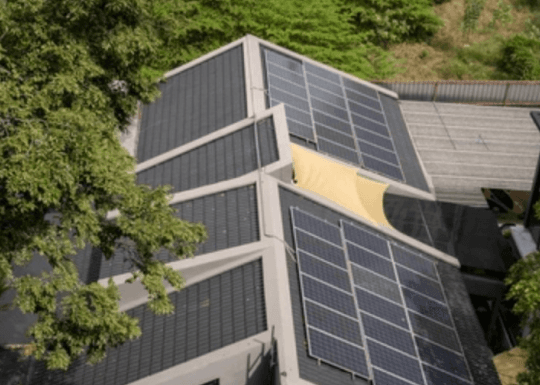
On-Grid Solar Rooftops allow distribution costs to be reduced significantly. Although they require a fixed one-time cost of installation, they can help generate great savings to households. Further if these solar rooftops are integrated with the central electricity distribution grid, consumers with solar capacity could benefit from ‘net-metering’. Net metering is a billing mechanism that allows individuals with on-grid solar rooftop plants to ‘sell’ (registered as negative units on their bills) for the excess electricity they generate and feed back into the grid. This excess electricity is consumed by other consumers.
Focusing on Renewables and Reducing Commercial Tariffs
Public DISCOMs have been slow to invest in renewable energy infrastructure, especially when it comes to linking existing generation sites onto the central distribution grid. Generation and distribution costs of renewable energy sources have been cheaper, allowing private DISCOMs to tap into this market. Solar power transmission benefits from something called a ‘Transmission Loss Waiver’. All distribution across electricity results in loss of electricity, however distributors of renewable sources of power can claim the exact units of electricity they have injected into the grid at the source point. In other words, if you put in 10 MW at the source point, you can take out 10 MW at sink/load point, whereas a fossil-fuel power distributor would recover a fraction of the amount he injected depending on rates of energy loss. This coupled with the high tariffs that Public DISCOMs levy on commercial and industrial customers, has caused a growing trend of large paying commercial clients shifting to more private distributors (who are more dependent on renewable sources of power). This has further strained the revenue sources of public DISCOMs.
The availability of various measures of reducing AT&C costs leads to one conclusion: the solutions to improve DISCOMs’ financial health exists. So why aren’t we seeing the implementation of these technologies? This is due to the lack of incentives in the public sector and the stickiness of change in government agencies. Therefore our policy framework should aim to provide incentives to public DISCOMs and help them achieve the goal of reducing their AT&C losses.
The Policy Framework
Our policy recommendation combines a mandate of Rooftop Solar Panels for certain domestic, commercial and industrial establishments while providing an incentive structure to public DISCOMs to implement this policy. This would combine the three solutions offered above with a focus on (b).
A CEEW report estmiates average electrified household consumption in Delhi to hover between 5-9 kW per day. This number is likely to be an overestimation of national average household consumption, as Delhi is prone to harsher weather conditions. The cost of setting up a rooftop solar unit of 3kW is between Rs. 1,89,000 – 2,15,000. But, households setting up solar units are also eligible to receive a subsidy, from PM Surya Ghar Yojna, of Rs. 78,000. The net cost comes down to about 1 lakh rupees. Research shows that increasing the scale of solar panel production due to rising demand will bring this cost down further.
Our recommendation is to empower DISCOMs to mandate households above a certain size, commercial establishments, industrial locations to install solar rooftops. This would reduce the need for distribution and allow consumers to take advantage of the lower unit cost of production that solar energy provides. Such a shift would also reduce the volatility of power production costs as changes in coal prices would not impact solar power costs. Additionally, such a policy would reinforce India’s commitment to renewable energy. While this would improve local ecological distress, it would help India’s standing in diplomatic discussions of climate finance.
The largest barrier to such a mandate is the large fixed cost associated with setting up solar panels. We invite the government to mitigate this cost by increasing the subsidies it provides. Currently, the subsidy is capped at Rs. 78,000 for 3kW. The government should increase subsidies for households that set up a higher capacity solar unit. Further, it should allow households that generate electricity above their requirements to feed it back into the central grid and compensate them monetarily. Currently, the government is funding the gap in DISCOM revenue and cost. To put into perspective, if the current DISCOM losses of 6.77 lakh crores are used by households to purchase solar units of 3kW each, more than 6.5 crore households can be covered. That is more than 21% of India’s households.
Policy Incentive Structure
To mandate solar panel adoption at the national level we need to leverage incentives for DISCOMs through their existing subsidy payment structure. To do so, this policy framework should outline clear targets, scope and incentives for adoption. Within different categories of buildings, installation requirements would differ according to rooftop size and energy needs. Take for instance a similar policy in the sector of distributing water. In the city of Bangalore, rainwater harvesting is compulsory for owners of sites with not less than 108 sq m of area. Likewise, domestic buildings over a certain size can be mandated to install rooftop solar panels (thus ensuring only those who can afford solar panels will be made to switch to renewable energy). Targets could include specific installation deadlines as well as capacity targets.
Financial incentives to DISCOMs could include giving grants to DISCOMs who update their existing infrastructure to accommodate solar/renewable energy. DISCOMs that meet targets could receive faster repayments from the government while those that do not meet this mandate, shall not.
Final Recommendations
Mandate rooftop solar panels in urban residential centres, large agricultural farms, all commercial and industrial units.
Renew grid infrastructure towards renewable energy sources through an incentive structure for DISCOMs.
Install smart metres and use flexible tariffs to effectively manage electricity demand.

Annexure 2

The top ranked three DISCOMs are privately run
85% of all private DISCOMs feature in the top 30 ranked DISCOMs
08 January, 2025
Subscribe to our newsletter
Subscribe to our newsletter
©2024-25 Isacc Centre for Public Policy