
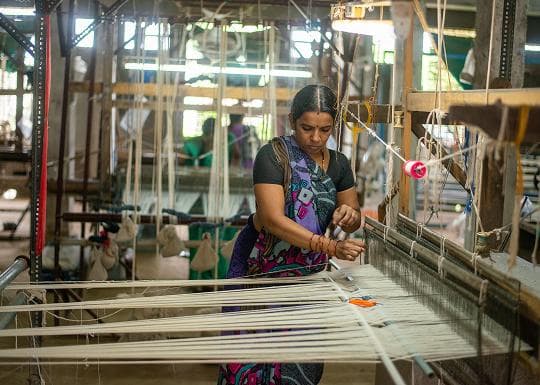

India is currently at a pivotal moment in its economic and demographic trajectory. In 2025, Indiais estimated to overtake China as home to the largest working-age (15-64 years) population inthe world (Deshpande and Chawla, 2023)1. However, it is yet to tap into the full potential of this‘demographic dividend’. A large share of its prime working-age population remains out of thelabour force. As of 2023-24, nearly two-thirds (64.4 per cent) of India’s women (aged 15 years ormore) were not part of its labour force—i.e. they were neither working nor looking for work, datafrom the Periodic Labour Force Survey (PLFS) shows. Among men of the same age group, thecorresponding share was 22.5 per centi.
The picture remains sobering even among those with high levels of education. In 2023-24, amongwomen (aged 15 years+) who had a postgraduate or higher degree, only half (51.1 per cent) werepart of the labour force (among men, this share was 89.4 per cent)ii. Among women of theworking-age group (i.e. 15-59 years) who had received formal vocational or technical training,again, only 58.1 per cent were part of the labour force (either employed or unemployed) and 41.9per cent were not looking for workiii.
Among the women who were in the labour force and employed, over two-thirds were self employed, not necessarily as entrepreneurs and employers but primarily as own-account workersor unpaid helpers. Self-employment was high for men too, but women were more likely to beengaged in this form of employment. Only a small share of those in employment were in regularwage employment or running firms where they employed others. Agriculture and the primarysector remained the predominant employers of India’s workforce, especially the femaleworkforce.
A consequence of these skewed and gendered labour market patterns has meant that the Indianeconomy is unable to benefit from the potential of some of its most qualified and productiveworkers.
While gender gaps in the workforce are common around the globe, India’s case remainsconspicuous given the quantum and persistence of these gaps. With a female-to-male labour
force participation rate (LFPR) ratio of 42.6 per cent in 2024, as per the World Bank’s data basedon modelled estimates from the International Labour Organization (ILO), India trailed the globalaverage of 69.6 per cent by a significant distance. This ratio was similar at the turn of themillennium (40.8 per cent), and it worsened in subsequent years, before recovering.
Economists have often explained women’s labour force participation as having a U-shapedrelationship with economic development (see Jayachandran, 20202 and Goldin, 19943 asexamples, though there are some disagreements as well). Female LFPR tends to be higher at lowlevels of income but declines as incomes rise, and rises again at higher levels of income. This istrue both at the household level and at the level of the larger economy.
In India, however, the impressive economic growth of recent decades hasn’t translated intoincreased economic participation or opportunities for women. In fact, female labour forceparticipation witnessed a drop before recovering in recent years. Research has pointed to variousreasons behind this—from the lack of non-farming employment opportunities, decline inmanufacturing employment4 and occupational segregation leading to lack of adequateopportunities5, to the relative increase in wages of men leading to women reducing their laboursupply to supplement household incomes (the counter-cyclical nature6 of women’s labour forceparticipation). Even the recent increase in female labour force participation has been drivenlargely by an increase in self-employment7, primarily in rural areas, and not by regular wage orsalaried employment.
Beyond adversely impacting India’s ranking on various global indices, these skewed labourtrends have serious consequences—they hold India back from tapping into its full economicpotential, prevent firms and companies from benefiting from our entire talent pool, limitwomen’s lives and freedoms, and adversely affect not only the overall public culture but also thesocio-economic outcomes of both women and households.
WHAT CAN PUBLIC POLICY DO?
Several industries and occupations have kept women out or on the margins for decades, if notlonger. When women’s presence remains scarce in any arena, it becomes a barrier in itself,discouraging others from entering since women are more likely to join spaces where otherwomen are already present. Public policy can create the conditions to break the status quo, enabling a critical mass of women to enter and participate in activities from which they havebeen traditionally excluded on an equal footing.
There are multiple ways to do this: First, public policy must ensure women do not face any legalbarriers to accessing work opportunities. Second, policies could make it mandatory for employersto ensure a minimum representation of women and/or implement specific policies that aretargeted at women, such as mandatory paid maternity leave, providing transportation to femaleemployees, etc. While designed with the intent to promote women’s workforce participation,these can also sometimes lead to resistance from firms or create negative incentives for them tohire women (with female employees seen as having higher costs), leading to fewer women gettinghired (for instance, see Beneerjee, Biswas, and Mazumder, 20248 and Gupta, 20249, who look atthe unintended consequences of maternity leave in India, or Bhalotra et al. [forthcoming]10 onthe unintended impact of legislating to handle workplace sexual harassment). Third, instead ofthe former approach that places the onus of addressing supply-side constraints on firms, publicpolicy can help create the enabling conditions and infrastructure that make it easier for womento access economic opportunities. Kowalewska (2020)11 finds evidence that public policies canenable a critical mass of women even without placing hard mandatory requirements on business,but rather, by adopting a ‘soft’ voluntary regulations approach. However, the success of thisapproach depends on the broader public provision for women-friendly policies.
THE FOLLOWING SECTIONS IDENTIFY SOME POLICY MEASURES THATCAN HELP INDIA CLOSE THE GENDER GAPS IN ITS LABOUR MARKETS:
REMOVE LEGAL RESTRICTIONS:
Even though India’s Constitution envisages equality of opportunity for all, various laws restrictwomen’s full and equal access to employment opportunities. In 2022, there were more than 50acts and 150 rules in India preventing women from accessing employment opportunities, as perAnand and Kaur (2022)12 in their report, ‘State of Discrimination’. These laws impose limitationsand restrictions on employers hiring women, and often pertain to either working at night or inwork that is seen as hazardous, arduous or morally inappropriate. In subsequent editions, theState of Discrimination report found that while some states have eased some restrictions, manyof these continue to persist. The most recent edition finds that the 10 most populous states inthe country prohibit women from working in 217 different factory jobs13.
The Union Government’s Economic Survey 2024-25 also recognises this barrier, noting that‘labour laws intended to protect the rights of women workers have, more often than not,discouraged hiring by creating systemic barriers to their entry into the workforce’. Removingthese restrictions is a necessary first step to dismantling demand-side barriers that keep womenout of the workforce. While workers deserve protection from exploitation, the role of publicpolicy is to facilitate enabling conditions that ensure safe and humane workspaces for all, andnot discrimination rooted in paternalism, which prevents one half of the population fromaccessing work opportunities on an equal footing.
FACILITATE ACCOMMODATION CLOSE TO THE WORKPLACE:
While India has recorded staggering economic growth in recent decades, it has not translatedinto the availability of high-quality employment opportunities for everyone. Some of this hasbeen attributed to India’s shift from the primary to the tertiary sector, without the middletransition. Manufacturing also has the ability to create large numbers of jobs for women. Womencomprised over a third of India’s manufacturing workforce in 2023-24, and their share within theworkforce has seen an increase in recent years, as Nileena Suresh’s analysis14 of PLFS data shows.However, they are more likely to be working in informal manufacturing rather than in organisedmanufacturing, where they comprise just over a fifth of all directly employed workers—a sharethat has remained largely stable over time (Dhamija, 2023)15.
Setting up large factories and industrial clusters—ones that can generate significantemployment—requires large tracts of land, which is often available on the outskirts of cities andat a distance from residential areas. For women, this distance can become a barrier to accessingthese newly created job opportunities. Providing accommodation to workers close to theworkplace can not only help dismantle that barrier for women but also help factories andenterprises attract a larger pool of workers in general, making them more competitive. Chinapioneered this model of the ‘dormitory labour regime’, allowing its factories to tap into labour(though it also meant a lowering of freedoms for the workers)16. Several East Asian economiesfollowed in its footsteps (see Sheng and Shrestha, 199817; Nguyen et al., 201618; Ramadhani andManaf, 202019).
In an advisory issued to employers with the intent of boosting women’s participation in theworkforce, the Ministry of Labour and Employment recommends that every large and micro,small, and medium enterprise (MSME) employer should ‘collaborate to build or facilitatecommon working facilities and/or dormitories/working women hostels’. This would help reduce travel times for the employees and enable employers to include more women in their workforce.The guidelines also recommend attaching childcare and senior care facilities to these hostels.
In its 2024 report ‘SAFE Accommodation—Worker Housing for Manufacturing Growth’, NITIAayog highlights the importance of investing in such residential facilities. It notes:
“A key challenge in this growth trajectory is ensuring the availability of a sufficient workforce in a single,centralised location. Given the population density and scale of operations, manufacturing relies heavilyon migrant workers. This situation presents a complex dilemma where the development of factories hingeson the availability of accommodation, yet the demand for housing relies on the existence of factories.Inadequate accommodation near industrial hubs contributes to high attrition rates, low productivity, andworkforce instability. Moreover, this prevents workers, particularly women, from migrating in search of better employment opportunities, thereby impacting the manufacturing sector’s competitiveness andundermining the sector’s growth potential.”20
The report also identifies potential regulatory reform to pave the way for more working housingthat could help expand the worker supply for India’s factories.
In 2024, the state of Tamil Nadu joined hands with manufacturing firm Foxconn to build aresidential complex catering to over 18,000 women workers in the company’s factories inSriperumbudur. This was the first residential complex of this scale built by a state governmentfor a private manufacturer. The company followed it up with dormitory facilities for its factoryworkers in Chennai later that year. Women comprise the bulk of the company’s employees inIndia.
While women-only residential facilities can enable women to enter and remain in the workforce,they may also come with limitations in some cases. One, firms are likely to invest in these onlywhen they largely depend on women workers. Where the share of women is low, companies mightnot find it cost-efficient to invest in such facilities, and consequently, women’s participationmay continue to remain low. Second, such facilities might work better for younger women,particularly those who are not married or don’t have children. Women with partners and/orchildren may want to live with their families rather than on their own.
Building residential facilities that cater to all workers and/or allow families to move in togethermight be a way to avoid these limitations. These will allow firms to attract more women across the age spectrum and build a bigger pool of workers in general. Allowing families to live togetherwhile accessing employment will incentivise workers to remain in the workforce longer, as sucharrangements allow workers to better manage their professional and personal lives together.Building such residential facilities also creates backward and forward linkages, boosting localeconomies and widening the geographic spread of economic development beyond a handful ofcities.
In addition to investing in accommodation facilities close to upcoming and existingmanufacturing units, building working women’s hostels can be an important way to supportwomen in accessing employment opportunities that are located at a distance from their homes.Working women’s hostels have existed in India for decades. Satyogi (2023)21 traces their originsto 1972-73—as women sought work in Indian cities, the challenge of safe accommodation andsecurity emerged, and in response, such hostels were developed by voluntary organisationswith funding aid from the government. In subsequent years, public policy evolved to increasetheir budgetary allocations and expand their coverage.
Currently, the government runs the Sakhi Niwas scheme. Whereas earlier the scheme was runas a grant-in-aid initiative where funds were released to states and union territories (UTs) forthe construction of new hostels or expansion of existing ones, in its current form, the schemeis being run as a demand-driven, centrally sponsored scheme. Now, states and UTs assess theirrequirements and submit their proposals, and once approved, the funds are released.
There were 523 functional Sakhi Niwas hostels spread across the country at the end of 2024,and 5.29 lakh women had benefited from these between April 2014 and December 2024, as perthe Women and Child Development (WCD) Ministry’s website. However, not all states havesuch facilities; Bihar, Goa, Ladakh, Punjab, Tripura, Uttarakhand, and West Bengal do not haveany hostels as per the WCD Ministry data. Increasing the availability of such hostels can helpmore women access work and educational opportunities. The Union Government allocated INR5,000 crores to the scheme for the construction of hostels in FY 2025.
While government-run hostels are affordable, they can suffer from long construction delays,limited services, and poor management or quality. Private accommodation with betterfacilities may be unaffordable for many. The state of Tamil Nadu runs its hostels—the ‘Thozhi’hostels—via an innovative public-private financing model that can address both thesechallenges. The state provides the land and partial grants, and the Tamil Nadu Shelter Fundco-finances the construction of these hostels. The fund conducts an open bidding processwhere private operators can bid to operate these hostels. The result has been hostels that aresafe but also have modern infrastructure with quality services, allowing women to chooserooms based on their budgets. The hostels also have creches and facilities for those withdisabilities (World Bank, 202422).
INCREASE THE AVAILABILITY OF PUBLIC TRANSPORT:
Residential facilities close to the workplace are one way to make jobs more accessible to workers,especially women. Reliable, safe, and affordable transport is another. Men and women commutedifferently, and this has implications for their ability to participate in economic life. As perCensus 2011, nearly half (45.2 per cent) of working women did not travel to work; among thosewho did, walking was the most common mode of travel. Buses were the next most used mode oftransport. Among men, nearly three-quarters of the workers did travel, and while walking wasthe most common mode for men too, they were less likely than women to be doing so. The nextmost common modes were bicycles and two-wheelers, and buses were the fourth most commonmode. Women were also more likely to be travelling shorter distances. It is in this context thatthe availability of affordable, regular and safe public transport assumes salience for women.
In recent years, several states have made bus travel free for women. Field reports (see exampleshere, here, here, and here)23 suggest that these are helping women, especially those from low income households, in various ways—from better access to markets for small business owners toimproved savings for daily-wage earners and greater independence for women. Women’s use ofbuses has increased substantially across states where such schemes have been introduced.However, to ensure that their full benefits are harnessed, there is a need to increase investmentin public transport. In several cities, there is a lack of sufficient number of public buses andtrains, leading to overcapacity that not only creates safety hazards for all but also leads to a bias
and backlash against women riders24. Increasing the availability and frequency of buses isessential to ensure the success of these initiatives. To specifically support working women, thegovernment could consider hub-and-spoke models that cater to their needs. Round-the-clock availability of good public transport that is equipped to ensure the safety of women can helpwomen access jobs that may be located at a distance or where work shifts spill over to very lateor early hours. In the absence of such public facilities, the onus lies either on women themselvesor on individual firms to arrange for safe transportation, and not all organisations have therequired resources or commitment to do so. As a consequence, women end up missing out onpotential employment opportunities.
INVEST IN CHILDCARE INFRASTRUCTURE AND POLICIES:
Given that women tend to shoulder a disproportionate share of childcare-related work, theavailability of quality and affordable childcare services has been recognised as a critical factor ininfluencing women’s ability to participate in labour markets around the world (see, for example,Kowalewska, 202025; Clark et al., 201926; Chaturvedi, 201927; Anukriti et al., 202328). Recognising its importance, India has taken essential steps to make such services available to workingparents, especially working mothers.
In 2017, India amended the Maternity Benefit Act, 1961, directing all establishments with 50 ormore employees to arrange a creche facility at their office premises. The act also directsemployers to ensure women can visit these facilities up to four times a day.
Additionally, India has been running the National Creche Scheme to provide daycare facilities tochildren aged six months to six years (beyond six years, the Right to Education Act makes schooleducation a right for children aged 6-14 years). The creche scheme was launched to supportwomen’s labour force participation, and the WCD Ministry guidelines envisage creches to belocated near homes or the place of work of mothers (ideally at a walkable distance of 0.5-1 km).The creches are being run at Anganwadi centres, and along with providing a safe space to hostchildren while parents are away, they are also expected to provide nutritional and learningservices for the young children.
For the majority of India’s women who work either in informal employment or are self-employed,these creches can provide the necessary support as they manage the dual demands of theiremployment and their role as parents. However, despite existing for some years now, the crechescheme is yet to translate into the availability of services for India’s women. For instance, therewere 11,395 approved Anganwadi-cum-creches as of 28 February 2025, but only 1,761 (~15 percent) were operational, WCD Ministry data shows. In several states, not a single creche wasoperational.
In addition to the creches supported by the WCD Ministry, Karnataka’s Koosina Mane crechesprovide another childcare model, specifically for women workers in rural areas. In 2023, the stategovernment announced that it was setting up Koosina Mane (or children homes/creches) in 4,000gram panchayats that would cater to women working under the Mahatma Gandhi National RuralEmployment Guarantee Act (MGNREGA). In addition to supporting mothers, the creches wereenvisaged to create new job opportunities for women. While creches are usually run by the WCDMinistry, the Koosina Mane creches are run by the Department of Rural Development andPanchayat Raj.
While some companies do support their employees with childcare leave and support either outof compliance or voluntarily, relying on firms to provide such support comes with limitations.First, while creches can cater to male and female employees who are parents alike, firms may seethe costs of complying with such mandates and providing such facilities as additional costs ofhiring women, jeopardising women’s employment. Second, and more importantly, even whenfirms make such infrastructure available to their employees, the large majority of women end upnot benefiting because they are working in the informal sector, as casual labourers or in smallerfirms. Investing in more public infrastructure of care can provide essential support to all workers,especially women who continue to shoulder the bulk of caregiving responsibilities across the country. Public provision of such infrastructure and services also reduces the compliance costson individual firms and reduces the costs of hiring women.
GUARANTEE A MINIMUM LIVING WAGE AND EQUAL WAGES TO ALL WORKERS: Equal pay for equal work is envisaged in the Indian Constitution as one of the Directive Principlesof State Policy. In 1976, India passed the Equal Remuneration Act, which specified that it wasthe duty of the employer to pay equal remuneration to men and women workers for the samework or for work of similar nature. Since 1948, India has also had a law that envisages payingworkers a minimum wage. In practice, however, women’s earnings tend to be lower than thoseof men across employment categories, and their average earnings remain meagre, far below theminimum wage.
In the April to June 2024 quarter, women in regular wage and salaried employment earned INR17,034 on average, as compared to INR 22,375 for men29, data from the PLFS 2023-24 shows.Those working as casual labourers earned INR 306 per day (compared to INR 459 for men), whileself-employed women earned only INR 5,803 on average each month compared to INR 16,723 for
men. These numbers must be read keeping in mind that women are most likely to be self employed, an employment category that has been on the rise in recent years, indicating theoverall low earnings of women workers in India. India ranks among the bottom 10 countries onthe indicator ‘Wage equality for equal work’ in the World Economic Forum’s Global Gender GapIndex for 2025.
Several research studies have noted the persistence of wage gaps. Using data from theEmployment and Unemployment Surveys (EUS) of 1999-2000 and 2009-10, Deshpande, Goel, andKhanna (2018)30 found that women in regular wage and salaried jobs earned less than men, andmuch of the wage gap was discriminatory. Further, they found that while the wage-earningcharacteristics of women had improved relative to men in the period, the discriminatorycomponent of the wage gap had increased as well. They also note that gender wage gaps werehigher among low-wage workers compared to high-wage ones, and that this ‘sticky’ floor hadbecome stickier for women over this period. Duraisamy and Duraisamy (2016)31 had similarfindings—that women at the bottom of the distribution faced higher wage discrimination andthat it had increased over the years (1983-2012).
When women’s earnings are lower, they have fewer incentives to continue working and theirlabour force participation remains precarious. While the law envisions wage parity, ensuringthere is no wage discrimination in practice is essential. One nudge for this could be increasedtransparency—in some countries, for instance, companies are required to disclose their genderwage gaps. This simple requirement can bring in some accountability and create incentives forfirms to ensure they pay their workers equally, regardless of gender.
Additionally, while the law provides for minimum wages, ensuring a minimum living wage for allcan enable better living conditions for all workers, as well as help women who tend to beovercrowded in low-paying roles and industries. The ILO defines32 a living wage as ‘the wage levelthat is necessary to afford a decent standard of living for workers and their families, taking intoaccount the country’s circumstances and calculated for the work performed during the normalhours of work’. Essentially, a living wage allows a worker to meet their basic needs and live withdignity. Ensuring workers are paid a living wage and not just a minimum wage can help narrowthe gender wage gap, especially for those at the lower end of the wage-earning spectrum (Chenand Xu, 202433; Majchrowska and Strawiński, 201834; Kahn, 201535). The Asia Pacific Forum onWomen, Law and Development (APWLD) argues that industries often keep wages low to cut costsand stay competitive, and many of these industries, such as textiles, tend to employ women inlarge numbers36. Moving to a living wage paradigm can help. Evidence also indicates that organisations that pay workers living wages see higher retention and longer employee association.
ENSURE SAFE WORKPLACES:
Safety at the workplace should be non-negotiable, but for women, bullying, harassment, andsexual violence are common experiences at their workplaces. Such violence is a serious violationof their dignity and fundamental rights, and a very real barrier to their ability to participate inthe workforce.
In 2013, India passed the landmark Sexual Harassment of Women at the Workplace (Prevention,Prohibition and Redressal) Act—commonly referred to as the POSH Act—to address this. The actdefines what constitutes sexual harassment at the workplace and includes unwelcome acts orbehaviour that could be either direct or implied in this definition. It also has a wide definition ofthe workplace and covers workers in the unorganised sector, domestic workers, and any placevisited by an employee in relation to their work.
While the enactment of the law has been a significant step towards creating safe workplaces, itsimplementation leaves much to be desired. Another major lacuna has been the gap in using data to improve the implementation of the act37. Even though the act makes it mandatory foremployers to report data on cases reported and resolved, this data has not been used tounderstand the landscape of violence and its redressal. It would be very useful to use learningsfrom this data to understand compliance, identify firms that are not following the law in its fullspirit, and influence safety policies going forward. It should also be supplemented withemployer-employee surveys to complement and supplement the learnings. As noted in aprevious analysis (Chawla, 2024)38, ‘if the day-to-day experience of women at workplaces has theshadow of sexual harassment looming large, it is a continuous emotional and psychologicalburden that takes a severe toll on the well-being of women, and significantly diminishes theirability to work productively’.
ENSURE ADEQUATE SANITATION FACILITIES:
A news report in June 2025 highlighted the case of women workers at a construction site in theNational Capital Region who were removed from their jobs because they wanted to use thetoilet39. The report pointed to the lack of toilet facilities on such sites, creating serious issues ofhealth and dignity for women, and how they cope with the same. This was not the first time sucha gap had been highlighted in the press40. While policy initiatives such as the Swachh Bharat
Mission have led to increased and improved sanitation facilities at the household level (whichcan improve the labour supply of women41), access to toilets at the workplace remains a seriousand common barrier for women, especially those working in informal and precarious forms ofemployment.
Various government laws mandate the provision of toilets for workers, and yet, numerous fieldreports and lived experiences of women paint a different picture. The lack of toilets poses healthrisks42 for women, leading to discomfort43, infections44 and health concerns45, and safety risks asthey are forced to defecate in the open. As a consequence, it negatively impacts their economicproductivity and they are pushed to miss work days or work fewer hours46. Ensuring all womenworkers have access to clean and functional toilets is a simple intervention that can improvetheir workplace experience and productivity significantly. In their research using data from the73rd round of the National Sample Survey Office (NSSO), Posti, Khare, and Kumar (2023)47 foundthat access to toilets had a positive impact on the share of female workers in an informal firm.
Along with ensuring that individual firms are complying with the law, making available cleanand functional public toilets in markets, public spaces, and places that are easy for workers toaccess can help. It also reduces compliance costs on individual employers and firms, especiallysmall ones that lack adequate resources and infrastructure. More importantly, these createservices for floating worker cohorts that don’t have fixed workspaces but that have to movebetween locations constantly, such as street vendors, gig economy workers, drivers, deliveryagents, etc.
INVEST IN MODERN AND JOB-RELEVANT SKILLS TRAINING:
Women tend to be over-represented in certain sectors and roles, and many of these tend to paylower wages (see Suresh, 202548; Das et al., 202349; Dhamija, 202350; Mondal et al., 201851).Because of this gendered traditional presence, younger women and men often end up aspiringfor similar jobs and work as their senior peers, perpetuating the cycle and solidifyingoccupational segregation. Breaking the cycle at the level of skilling and vocational training canbe disruptive, building a bigger supply pool of female candidates for traditionally male
dominated roles. However, women are less likely to receive any form of formal or informaltraining as compared to men, and even when they do, they are more likely to get trained intraditionally female-dominated sectors.
Sample this: only 24.5 per cent of women in the working age group (15-59 years) had receivedany form of vocational training (formal or informal), as per PLFS 2023-24, in comparison with44.9 per cent of men. This share was only 18.9 per cent among younger women (aged 15-29years), while 33 per cent of younger men had received such training. The most common field ofvocational technical training was Information Technology and Information Technology EnabledServices (IT-ITES). Among men who had received any form of vocational or technical training,37 per cent had received training in IT-ITES, and among women, the corresponding share was28.4 per cent. After IT-ITES, for women, the next most common fields were textiles andhandlooms, apparel (27.6 per cent), beauty and wellness (7.2 per cent), healthcare and lifesciences (5.9 per cent), and office and business-related work (5.5 per cent). For men, the nextfour most common fields were electrical, power, and electronics (13.5 per cent), office andbusiness-related work (6.5 per cent), healthcare and life sciences (4.4 per cent), and mechanicalengineering (capital goods, strategic manufacturing) (4.3 per cent). (Note: these shares excludethe ‘Other’ field).
The need to invest in skilling women in non-traditional and modern vocations is particularlyimportant given the ongoing tectonic shifts in the world of work. With digital technologies,robotics, and artificial intelligence disrupting long-established roles and creating new ones, thecurrent moment presents an opportunity to accelerate the process of correcting the gender skewin several industries. Training women in these new-age skills and technologies can open upseveral new avenues for them—from logistics and manufacturing to green energy, the gigeconomy, robotics, and more. But getting younger women to be interested in theseopportunities—traditionally held by men—will not be easy. On one hand, there is a need toensure a steady pool of women who are enrolling for and participating in such upskillingprogrammes. On the other hand, it is important to reach out to young women along with theirfamilies and communities, and spread awareness about the possibilities.
Under its Skill India Mission, the Indian government runs several initiatives to train youngpeople in various vocational and industrial skills, such as the Pradhan Mantri Kaushal VikasYojana (PMKVY), Jan Shikhshan Sansthan (JSS), National Apprenticeship Promotion Scheme(NAPS), and Craftsmen Training Scheme (CTS), delivered through various Industrial TrainingInstitutes (ITIs) spread across the country.
As of 30 June 2024, India had 15,034 ITIs spread across various states. Over 300 of these wereexclusively for women. The share of skill training institutions exclusively for women was betteramong India’s National Skill Training Institutes (NSTIs). Of the 33 institutions, over half (19)
were exclusively for women. However, women remained a minority among those enrolled in theITIs. In the academic session 2022, women comprised only 14.1 per cent of those enrolled in ITIs,while men made up the other 85.9 per cent of students, an analysis of data from the Ministry ofSkill Development And Entrepreneurship’s NCVT-MIS-ITI Dashboard shows (while 46 per centof the total available seats remained vacant). Further, the top three trades in which students wereenrolled remained different for male and female students: electrician, fitter, welder for men, andcomputer operator and programming assistant, electrician and sewing technology for women.
In comparison, women comprised 80.4 per cent of the beneficiaries trained under the JSS schemebetween FY 2021-22 and 2023-24. However, they were mostly trained in beauty or apparel related skills. In a response52 to a question in Parliament, the Ministry of Skill Development andEntrepreneurship observed:
‘JSS scheme is offering courses which may be preferred by women such as Beauty Care Assistant,Assistant Hand Embroider (Phulkari / Chickankari / Kashmiri / Zari Zardozi / Kantha), BeautyCare Assistant, Assistant Dress Maker, etc. These courses are having [the] highest enrolment ofwomen beneficiaries.’
Similarly, the government runs several vocational training centres exclusively for women, butthe courses they offer largely fit traditional occupational stereotypes, mostly related to beauty,tailoring, secretarial roles, etc.
Barriers that prevent women from accessing economic opportunities, such as distance and lackof safe transportation and accommodation, also limit their access to these opportunities (NITIAayog, 202353). Additionally, there are financial constraints, lack of awareness, a tedious admission process that requires access to digital devices and services, as well as a lack of gender sensitive cultures and infrastructure at the ITIs that prevent women from enrolling in thesecourses (Ministry of Skill Development and Entrepreneurship, 202054). The predominance oflimited vocations and technical skills is another barrier preventing women from accessing skillsthat would enable them to access good-quality and better-paying jobs. Addressing these barriersand enabling women’s access to skilling opportunities, especially ones that can help them accessbetter jobs, should be a priority for public policy.
Traditional economics attributes low labour force participation to supply-side and demand-sidefactors. The supply side includes factors that impact women’s ability to ‘supply’ their labour orbe available for work, such as health, educational attainment, skilling, domestic responsibilities,etc. On the other hand, demand-side factors are linked to the ‘demand’ for women’s labour—theavailability of jobs, safe workplaces, remuneration, etc.
India has made remarkable progress on women’s education enrolment and attainment and onfertility and health outcomes (the supply-side factors). These have been accompanied byimpressive economic growth and development in recent decades. Yet, these gains have nottranslated into women’s economic participation to their full potential. There is not only aquantitative gender gap in our labour markets, but women are also far less likely to be in regular
wage employment, and their average earnings remain lower than those of men acrossemployment types. This is despite the fact that the gap in educational attainment has virtuallyclosed, and girls and young women consistently have better educational outcomes than men.Yet, women continue to shoulder a disproportionate share of unpaid domestic and caregivingwork that consumes the bulk of their time. On average, an Indian woman spent 236 minutes eachday on unpaid domestic work for the household in 2024, while an Indian man spent only 24minutes. These are some of the widest gender gaps in the world55.
While governments should not dictate how a household is run, public policy can help build andnurture the right infrastructure and services to alleviate this disproportionate burden on women.India has enacted several landmark policies in this direction—from mid-day meals to Anganwadicentres, and maternity and childcare leave. But beyond these supply-side factors, demand-sidebarriers remain very real roadblocks to women’s economic participation. These barriers preventwomen from altogether entering or thriving in the workforce.
Beyond outright legal barriers, organisations and firms tend to keep women out in myriad ways— from gendered hiring ads and biased recruitment processes to unsupportive work cultures,limited opportunities for growth, wage gaps, and lack of safety. While some of these are rootedin an explicit bias against women (such as assumptions that women won’t be able to do somework or are likely to drop out), others may be due to unintended or covert biases (for example,research evidence has shown that simple design choices regarding how job ads are worded orhow recruitment processes are structured may have implicit gender biases). In addition, otherbarriers may arise due to increased compliance costs when hiring women. The very laws that arebrought in to support women in the workplace end up jeopardising their prospects.
From helping ease supply-side constraints to dismantling these demand-side barriers, there is alot that public policy can do. Not only will these help women access more opportunities, theywill also make our labour force more competitive, productive, and allow us to unleash the fullpromise and potential of our young and ambitious population.
KEY RECOMMENDATIONS:
● Remove legal restrictions: Eliminate laws and policies that restrict women fromcertain jobs. Focus instead on creating safe, accessible and non-discriminatoryworkplaces for everyone.
● Invest in modern and job-relevant skills training: Instead of training women in alimited set of vocations, skilling programs for women should include modern, job relevant skills, including in traditionally male-dominated fields. This creates a largerpool of qualified female candidates for diverse roles and sectors.
● Provide accommodation near manufacturing units: Build or facilitate residentialcomplexes and dormitories near factories and industrial clusters. This removes amajor barrier for women living far away, attracts more workers, and helps all workersbetter manage their professional and personal lives.
● Invest in hostels for working women: Increase the availability of safe, affordablepublic hostels. Explore innovative public-private partnerships, like Tamil Nadu’s“Thozhi” program, to expand options.
● Increase the availability of public transportation: Invest in more frequent, safe,and available public transport. Implement hub-and-spoke models and round-the clock services to support working women with varied work shifts.
● Expand childcare infrastructure: Increase the number of operational public crechesin both urban and rural areas. Instead of putting the onus on individual employers,investing in public childcare infrastructure is crucial, especially for women who workin the informal sector, in smaller firms or in casual labour.
● Substantially increase the availability of clean and functional toilets: Along withensuring that individual enterprises provide sanitation facilities for their workers, it isimperative to provide clean and functional public toilets in public spaces. Thesecreate services for workers who don’t have fixed workspaces such as street vendors,gig economy workers, drivers etc.
● Ensure equal pay and a living wage: While laws for equal pay exist, wide genderwage gaps persists. Public policy should enforce wage parity – making it mandatory todisclose gender wage gaps can be one way. Further, shifting the focus from aminimum wage to a minimum living wage can help since women tend to beoverrepresented in low-paying roles.
● Enhance workplace safety: Safe and harassment-free workplaces are a fundamentalrequirement for women’s sustained participation in the workforce.
There is a need to ensure that the Sexual Harassment of Women at the Workplace (POSH) Act is beingimplemented in letter and spirit. Using compliance data to understand and improvethe law’s working is essential.
Subscribe to our newsletter
Subscribe to our newsletter
©2024-25 Isacc Centre for Public Policy